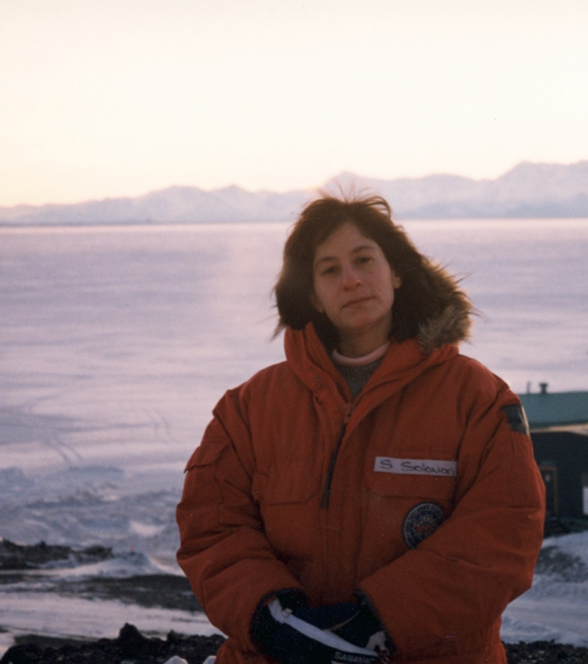
‘Everyone knows the weather here is the worst in the world.’
Susan Solomon learned just how bad the Antarctic weather is. In 1986–87, she led an expedition to find the cause of the ozone hole.
Because the hole only appeared in spring, she had to travel in near total darkness and in very cold temperatures. Solomon measured the levels of certain chemicals in the areas where the hole was appearing.
Her research showed that the ozone hole was caused by chemicals such as chlorine and bromine, then used in refrigeration and aerosols.
This discovery led to the 1987 Montreal Protocol, an agreement between countries across the world that banned the use of these harmful chemicals.
This agreement stopped the hole from growing, and in 2017 it began to shrink.